Rosemary Gower
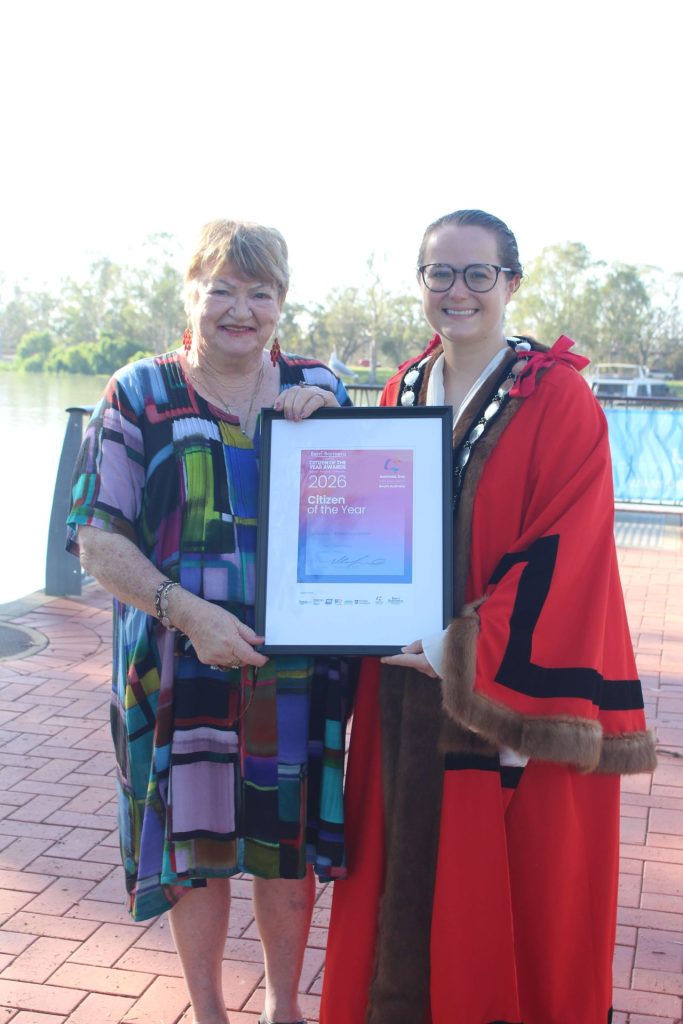
For most of her adult life, Rosemary Gower has been a passionate advocate for the Riverland, dedicating herself to promoting the region, attracting visitors, and preserving its rich history.
Born on 8 May 1945—the day peace was declared in Europe at the end of the Second World War—Rosemary is the daughter of Flying Officer William (Bill) Shueard and Sergeant Nancy Shueard (née Agar), both of whom served in the Royal Australian Air Force during the war. Her parents were living in Melbourne at the time of her birth, but after Bill was discharged from military service in 1946, the family returned to his hometown of Cobdogla in South Australia.
Tragedy struck when Rosemary was just four years old and her brother, Hallett, was only two and a half, when their father was killed in a truck accident. Determined to remain in the community, Nancy stayed in Cobdogla, completed the family home designed by Bill, and established the fruit block he had planned. Rosemary has often reflected that her life may have taken a very different path had her mother decided to return to Melbourne following her father's death.
In 1965, Rosemary moved to New Zealand, where she worked in five-star hotels across both the North and South Islands. During this time, she met and married her English husband before returning to Australia. The couple settled in Adelaide, where their son Tony was born. Following the breakdown of her marriage, Rosemary returned to Cobdogla to have her second child and has proudly called the Riverland home ever since.
Throughout her life, Rosemary has made an outstanding contribution to her community. Her involvement has spanned numerous local organisations, school committees, festivals, and community projects. She played a key role in coordinating several significant events, including the 40th Anniversary of the South Australian Country Music Festival. Rosemary also served as a Councillor with the Berri Council until health challenges prompted her to reduce her commitments and step back from many of her community roles.
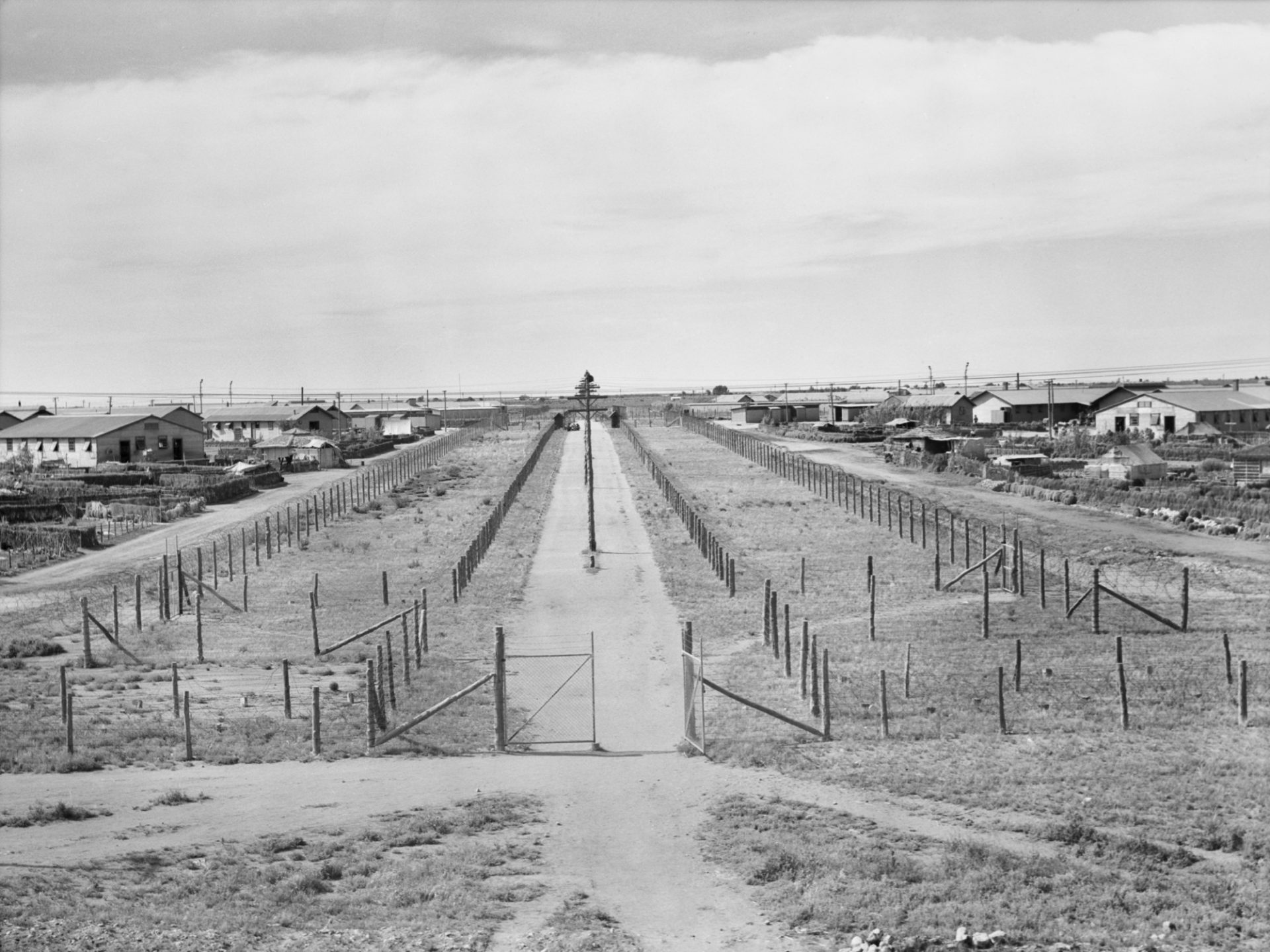
Rosemary’s passion for local history became particularly evident through her dedication to preserving and promoting the story of the Loveday Internment Camps of World War II. Recognising the site's significance as both a historical asset and a tourism opportunity, she undertook extensive research into the camps' history, a journey that connected her with academics, historians, archaeologists, descendants of internees, former internees, and many others from around the world.
A memorable milestone was hosting the Japanese Ambassador and delegation during their visit to the Riverland—an event organised by the Berri Barmera Council and supported by Major General Peter Phillips.
Rosemary was also instrumental in preserving a rare visual record of the camps. She was delighted to facilitate the production of a video featuring colour footage filmed at Loveday in 1943, believed to be the only known live footage from Loveday’s internment camps. The original film was gifted to Rosemary by the son of the late George Bolton, who captured the historic images.
Over the years, Rosemary's name has become synonymous with the Loveday Internment Camps. She has guided countless tours for overseas scholars, archaeologists, historians, descendants of Japanese internees, former internees, and film crews. Through presentations to schools, service clubs, and community groups, she has worked tirelessly to ensure the history of Loveday remains understood and remembered.
Alongside fellow advocate, longstanding member of the Loveday Internment Camp Committee and Councillor, the late Rhonda Centofanti, Rosemary championed the vision of establishing a dedicated museum for Loveday. Together, they travelled throughout New South Wales and Victoria to meet with curators and visit former internment and prisoner-of-war camp sites. Their efforts included an official Mayoral Welcome in Cowra, where Rosemary later returned as a guest speaker at a conference on Australia's internment camps. She was also invited to speak at a Japanese studies seminar at the University of Sydney.
Today, Rosemary remains actively involved with the Berri Barmera Council’s Loveday Internment Camp Committee. She continues to lead guided tours of the site and has played a key role in developing resources such as the committee’s website and self-guided tour app. Her commitment has also led to one of her most significant and proudest achievements, the establishment of the museum collection of Loveday artefacts displayed in the Barmera Visitor Centre.
Now in her eighties, Rosemary’s dedication to preserving the Riverland’s heritage remains unwavering. She continues to advocate for the establishment of a permanent museum at the site of the main Loveday camp, where the Loveday Hall now stands, ensuring that this important chapter of Australia's history will be preserved for future generations.
Jacque Zagotsis